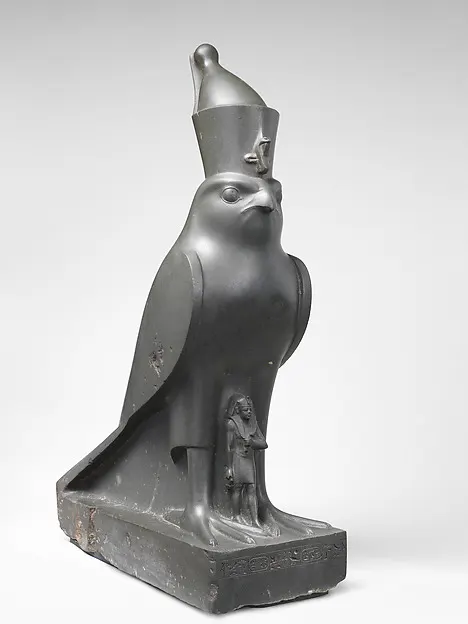
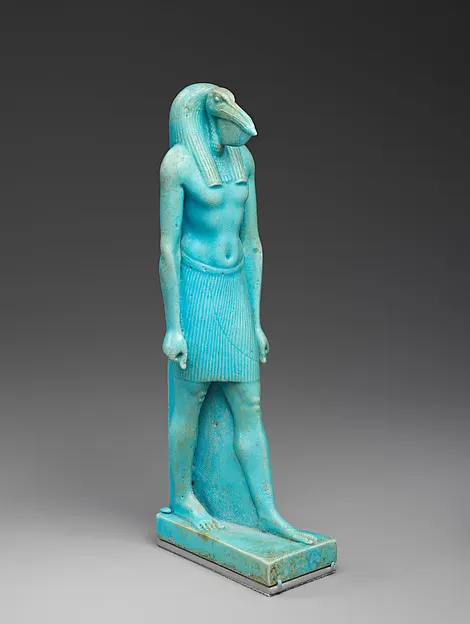
Egyptian artStatue of Horus as a falcon protecting King Nectanebo II
360–343 BCE · Late Period · Dynasty 30
Horus as a falcon shelters Nectanebo II: the last native pharaoh standing between Egypt and the Macedonian storm, under a god’s wings.
Mercury 91 is not affiliated with The Metropolitan Museum of Art. Images and object data shown here are public-domain Open Access (CC0) records from The Met collection. Citations are given so you can visit each work on the museum site.
Nectanebo II is the last Egyptian-born pharaoh before Alexander. This statue shows him small against Horus the falcon. Protection is hierarchical. The king is brave enough to be tiny.
Horus is sky and kingship. A falcon is a living hieroglyph of looking from above. Put that beside a planet named Mercury and you get two different flight metaphors: messenger speed versus hunting height.
Late Period hard stones love this compactness. The surfaces are tight. The theology is tighter. Egypt is using old gods as armor.
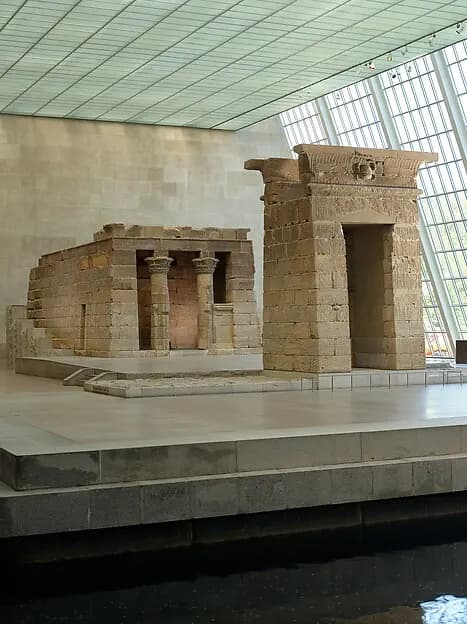
Dendur, in this same cluster, is a temple from the generation after conquest. Nectanebo is the last chapter of independence. Read them in that order and the falcon’s wings feel like a held breath.
Citation
Statue of Horus as a falcon protecting King Nectanebo II. 360–343 BCE. Metagraywacke. The Metropolitan Museum of Art, New York. 34.2.1. Rogers Fund, 1934
Public-domain Open Access (CC0) photograph. Dimensions: H. 72 × W. 20 × D. 46.5 cm, 55.3 kg (28 3/8 × 7 7/8 × 18 5/16 in., 122 lb.)