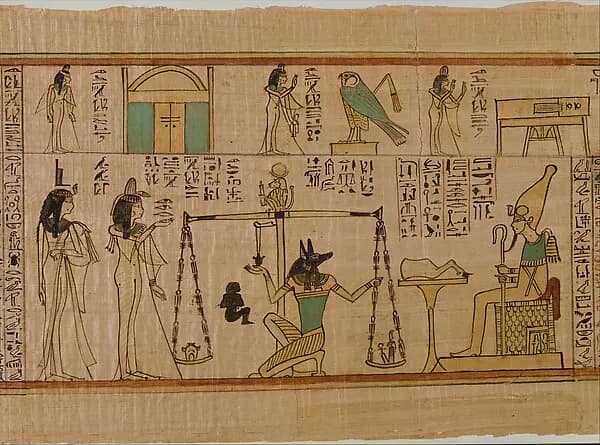
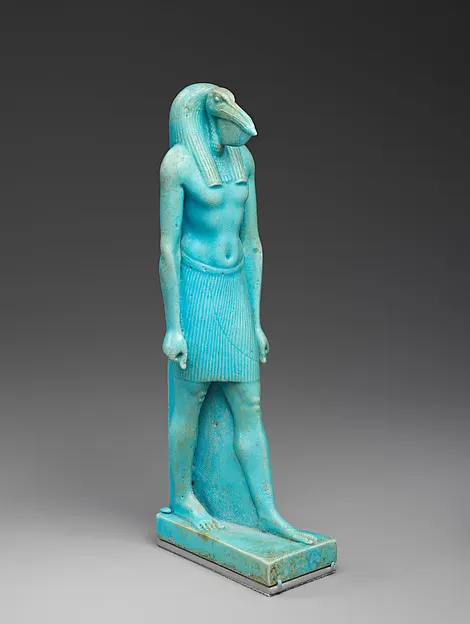
Thoth is the reason this gallery hangs beside the planet Mercury. In Egyptian thought he invented writing, kept the years, and recorded the weighing of the heart. Greeks later met him as Hermes Trismegistus. Romans named the fastest planet after their messenger god. The chain is not a museum partnership. It is a story people have told for a long time: wisdom travels, and it writes things down.
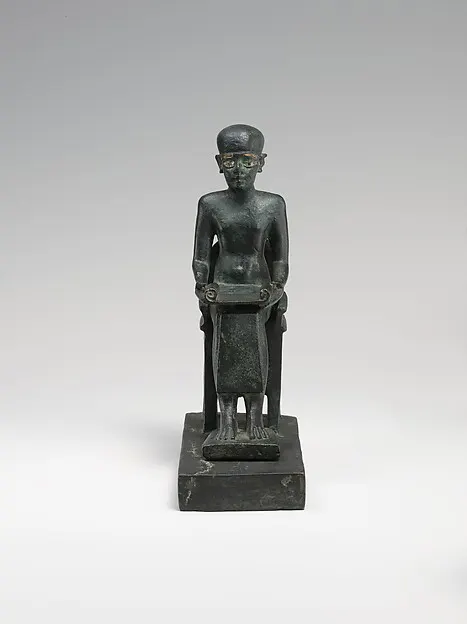
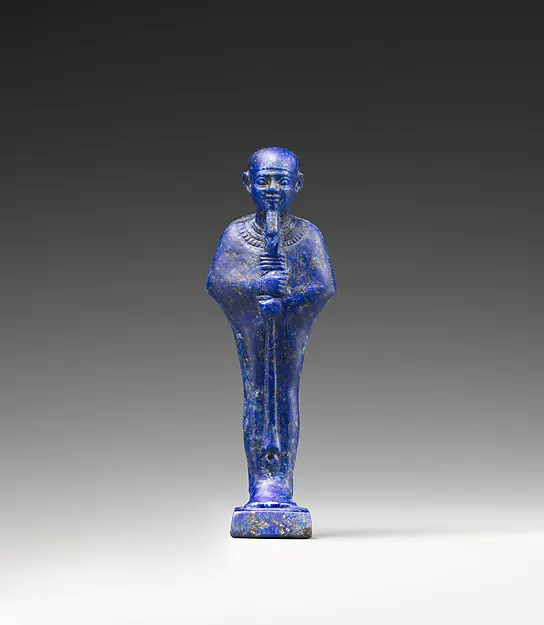
This small faience figure is Ptolemaic, made when Egypt was already in conversation with the Greek world. The ibis head is unmistakable. The stride is quiet and certain. You do not need a monumental statue to feel the office Thoth held. Scribes carried him as an idea even when the object fit in a hand.
In the Temple of Thoth inside the Mercury 91 universe, this work sits in the inner court. It is the key to the hang: a house of writing parked next to the messenger planet. If you arrive from the essay pages, you are reading. If you have an account, you can fly to the same figure as a stela in orbit.
Nothing here claims The Met endorses that reading. The object is public domain. The interpretation is ours: Thoth as the patron of night work, lists, and the courage to put a thought where it can be found again.