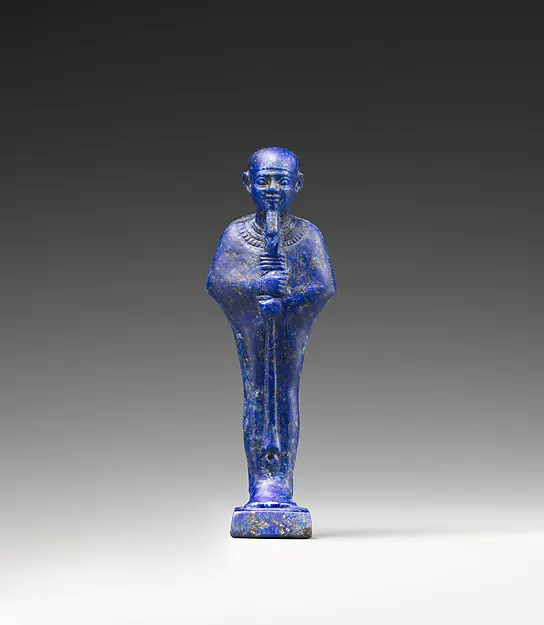
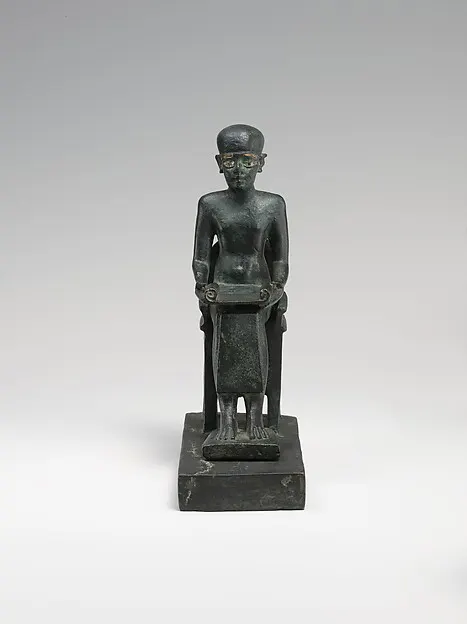
Imhotep lived in the Old Kingdom and designed the Step Pyramid at Saqqara. A thousand years later, Egyptians still made small bronzes of him as a seated sage with a scroll. This is not a contemporary portrait. It is a cult of intelligence. The man who stacked stone into a stair toward the sky became a god of writing and healing.
That afterlife of a career is the cleanest bridge to Mercury as a planet of messages. Imhotep is remembered for making a shape that could be read from the desert: a pyramid as a sentence. The bronze repeats the sentence at handheld scale.
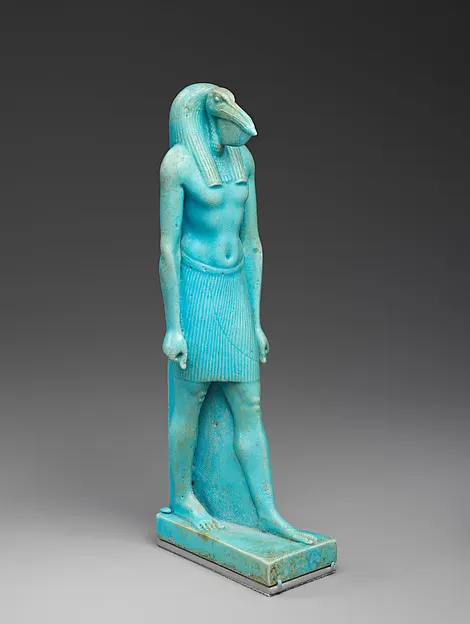
Compare him with Thoth. Thoth is a god who writes. Imhotep is a human who wrote the world into a monument, then got written into cult. Both sit in the writing cluster of this gallery because Mercury 91 is interested in people who turn looking into structure.
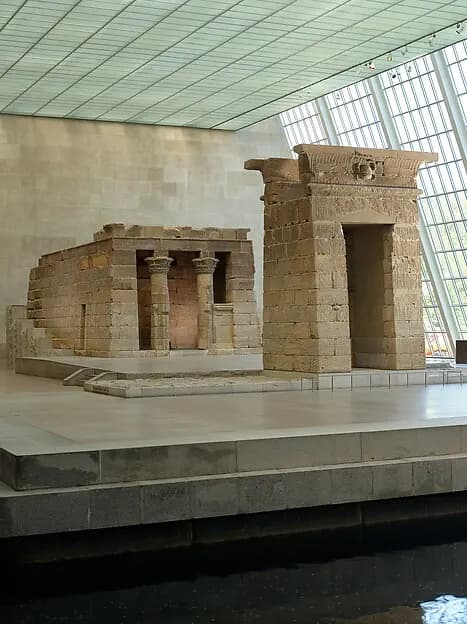
The Late Period loved ancestral kings and sages. In a time of foreign dynasties, a native architect-scholar was a way to keep Egyptian time. When you meet Imhotep in the Temple of Thoth, you are meeting that long memory, not a construction diagram.