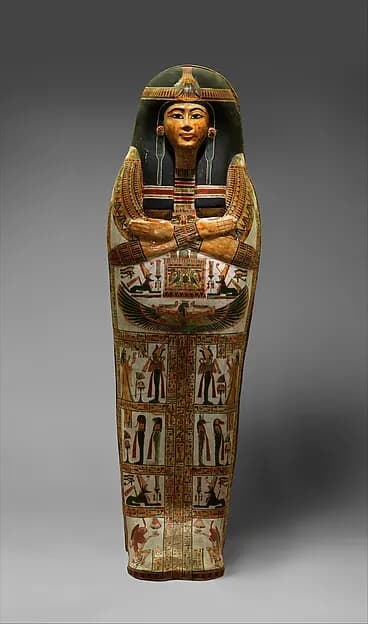
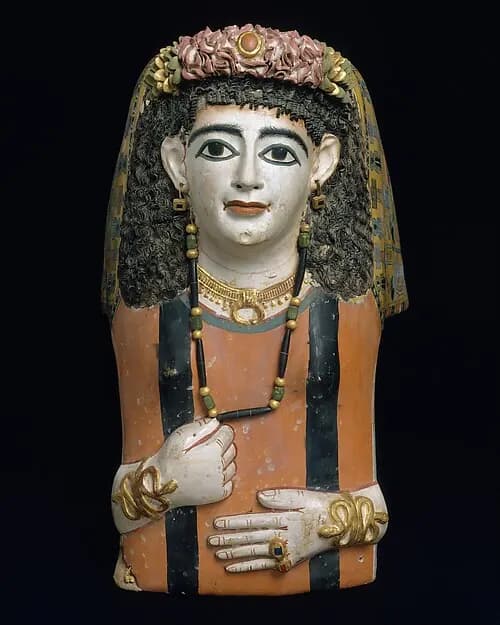
Mummy masks are identification devices. The dead must be recognized by gods and by their own ba. Idealized features are not vanity in the modern sense. They are a password. This woman’s mask is the face she needed the night to accept.
Gilding says sun. The flesh of gods is gold. To gild a face is to argue that this person can travel in solar company. That is afterlife physics, not jewelry.
Roman-period and Ptolemaic masks sometimes move toward portrait. This object still lives in the older language of type plus inscription. You are not looking at a snapshot. You are looking at a role that a specific woman occupied.
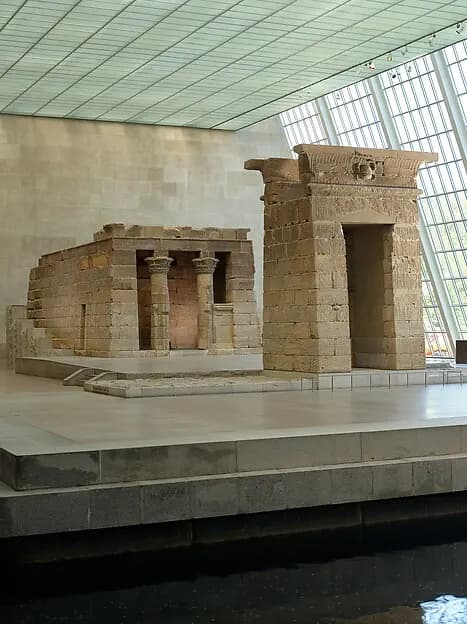
Hang it in a 3D temple and the mask becomes a stela of a face. That is almost too on the nose, which is why the essay stays with recognition. Mercury 91’s universe is full of named planets. Egyptian funerary art is full of named people. The mask is how a name keeps a surface.