Mercury 91 is not affiliated with The Metropolitan Museum of Art. Images and object data shown here are public-domain Open Access (CC0) records from The Met collection. Citations are given so you can visit each work on the museum site.
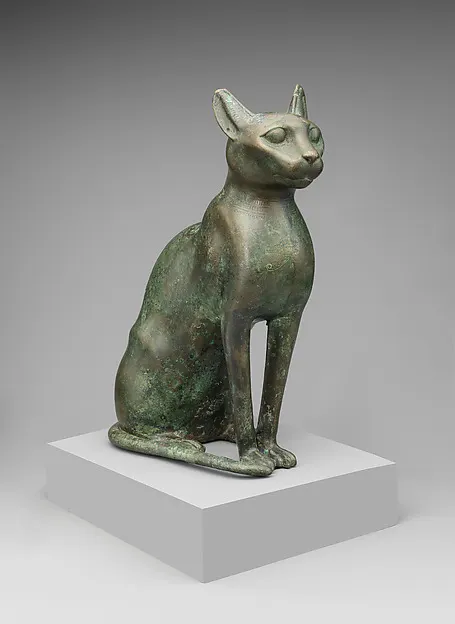
Egyptian cats are not internet history. They are Bastet, protection, and a huge Late Period industry of animal mummies. This bronze is a container as much as a statue. The elegant ears and sitting pose are a lid on a religious transaction.
Bronze cats look alert forever. That alertness is the gift. A house wanted that posture in metal when the real animal had been given to the goddess.
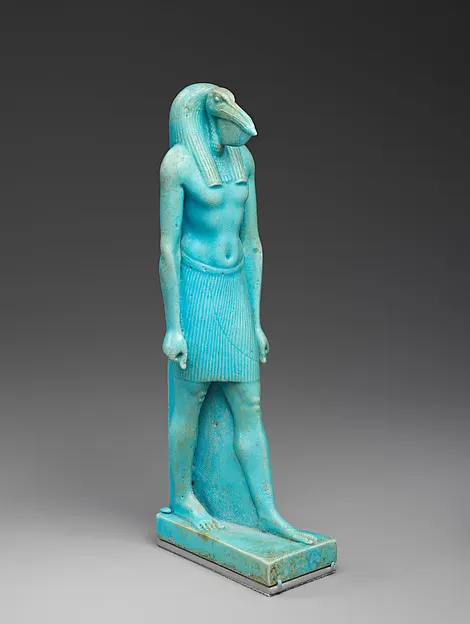
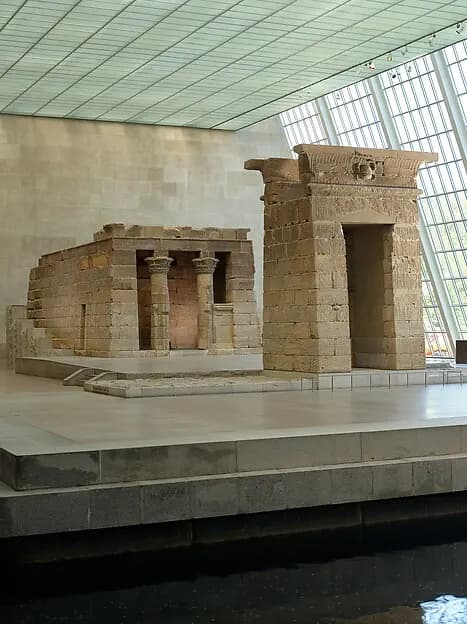
Thoth’s ibis and Bastet’s cat are two animals of attention: one writes, one watches. The Temple of Thoth is allowed a cat in the colonnade for that reason. Not every watcher is a scribe.
Ptolemaic date means this object is already in a world of Greek neighbors. The cat remains Egyptian. Some forms do not hybridize. They just continue, sitting.
Citation
Cat Statuette intended to contain a mummified cat. 332–30 BCE. Leaded bronze. The Metropolitan Museum of Art, New York. 56.16.1. Harris Brisbane Dick Fund, 1956
Public-domain Open Access (CC0) photograph. Dimensions: H. 27.4 × W. 11.9 × D. 23.3 cm, 2.5 kg (10 13/16 × 4 11/16 × 9 3/16 in., 5.5 lb.); With tangs: H. 32 cm (12 5/8 in.); With mount: 3.7 kg (8.2 lb.)