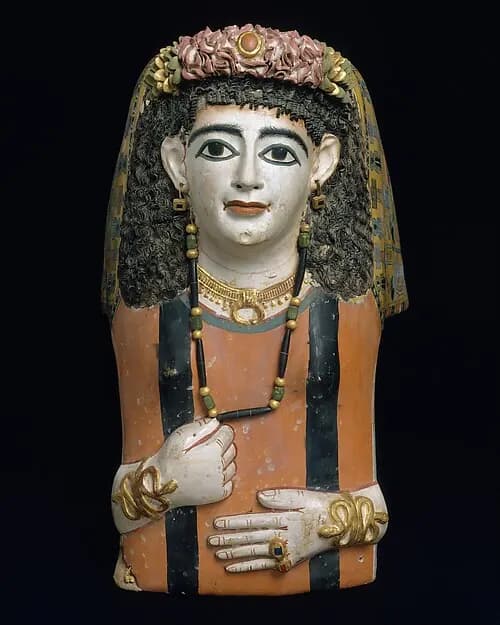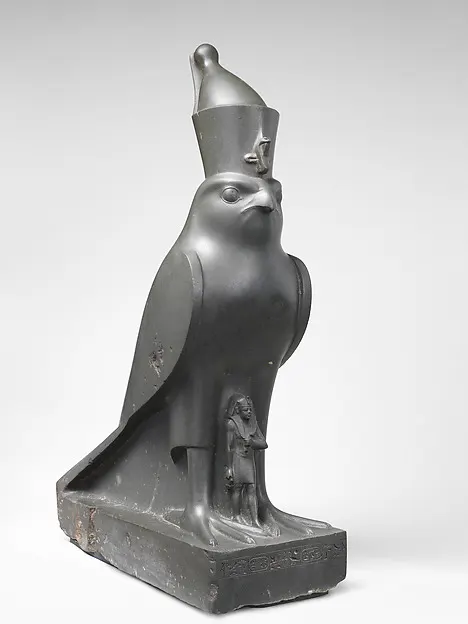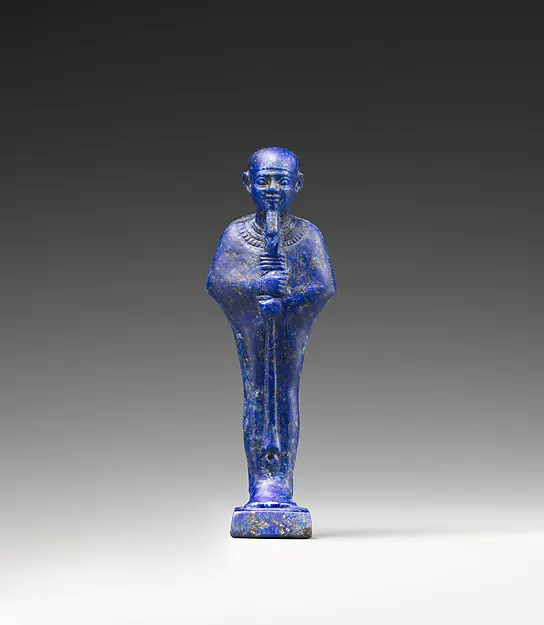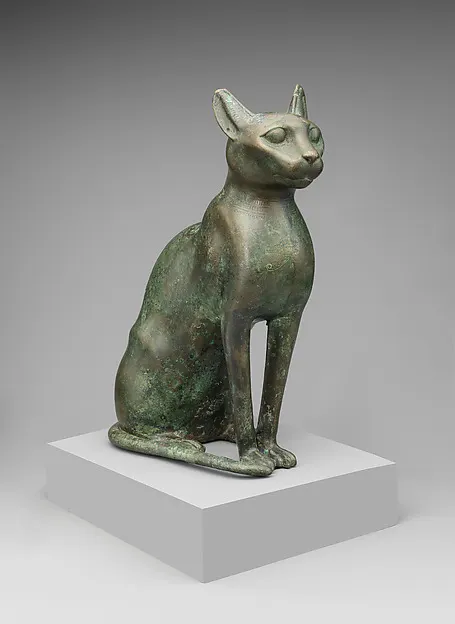
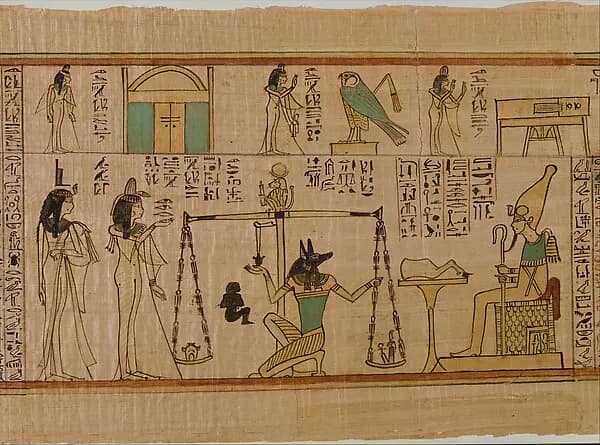
The Book of the Dead is not a single book. It is a shifting kit of spells that help the dead speak, pass gates, and keep a name. Nauny was a chantress of Amun. Her papyrus is a professional’s document as much as a private hope. She knew the hymns. The scroll is the score she wanted to keep after the voice stopped.
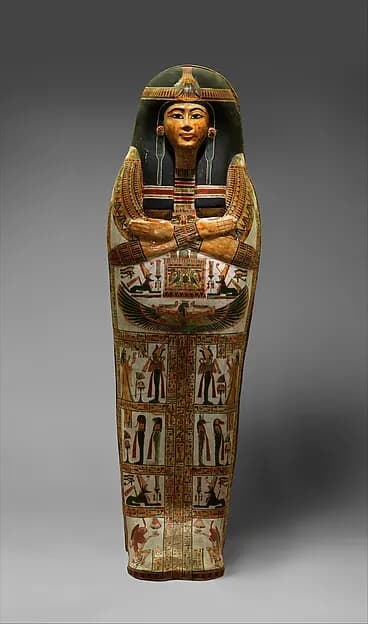
Egyptian afterlife geography is already cosmic. The sun boat travels the night. The sky goddess Nut swallows the sun and births it. Decans mark hours on coffin lids. A Book of the Dead is closer to a star chart than to a modern novel. It tells you where to stand when the river of darkness turns.
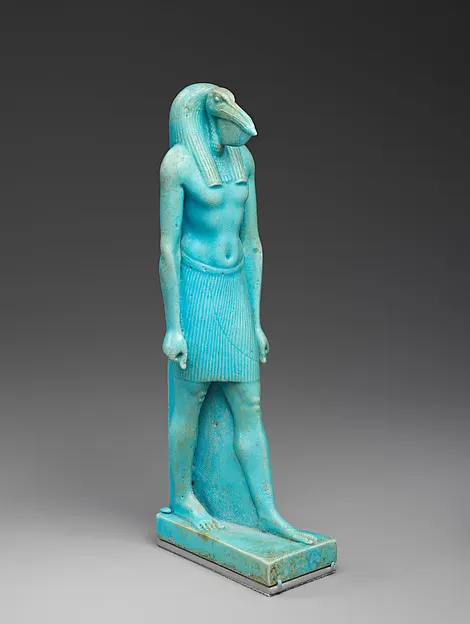
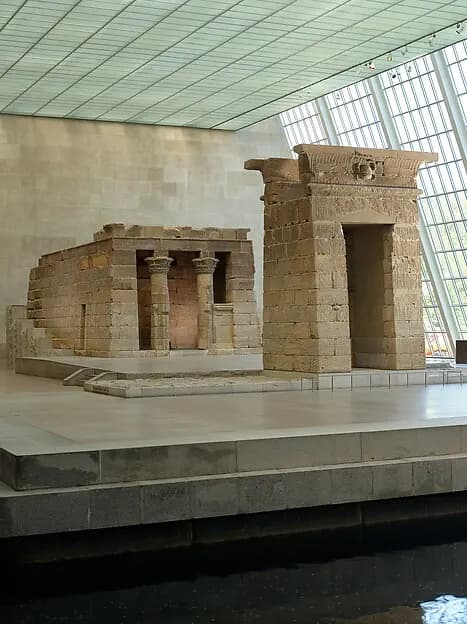
Mercury 91 does not treat this as a sleep-aid product page. The essay is about orientation. Nauny’s papyrus is a person insisting that the night has rooms, and that a trained voice can walk them. That is why the work is an inner-court highlight in the Temple of Thoth.
Read the figures as a sequence, not as decoration. Each gate is a test of speech. The modern analogue is not a quiz. It is the habit of naming what you saw so it does not dissolve. Public-domain pigment, museum citation, and a 3D stela are three ways of keeping the same insistence visible.