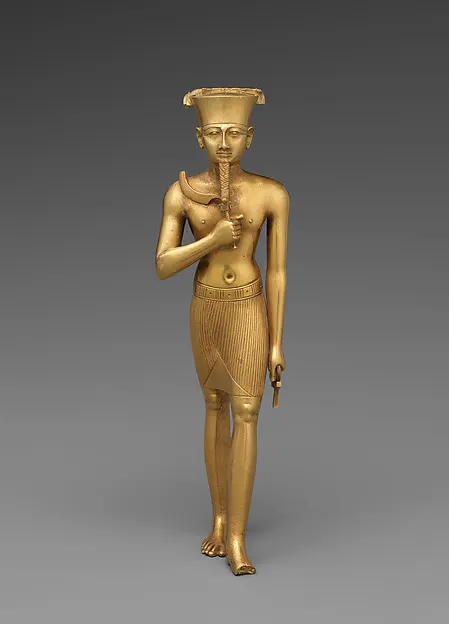
Statuette of Amun, ca. 945–721 BCE, The Metropolitan Museum of Art

Egyptian artStatuette of Amun

ca. 945–721 BCE · Third Intermediate Period · Dynasty 22

A bronze Amun is the hidden god made graspable: Thebes’ supreme deity in a statue that could be carried, dressed, and fed.

Mercury 91 is not affiliated with The Metropolitan Museum of Art. Images and object data shown here are public-domain Open Access (CC0) records from The Met collection. Citations are given so you can visit each work on the museum site.

Amun’s name is related to concealment. Cult statues were the opposite: they appeared in processions, received oil, and wore linen. This statuette is the portable version of a mystery.

New Kingdom Thebes ran on Amun’s estates. Chantresses like Nauny and Henettawy worked in that economy of hymn. A small Amun is the employer, in metal.

Hiddenness plus gold is a cosmic formula. Stars are hidden in day and fed to the night. Amun is hidden and still fed. The analogy is limited, which is why this paragraph stops at the formula instead of forcing a planet onto Thebes.

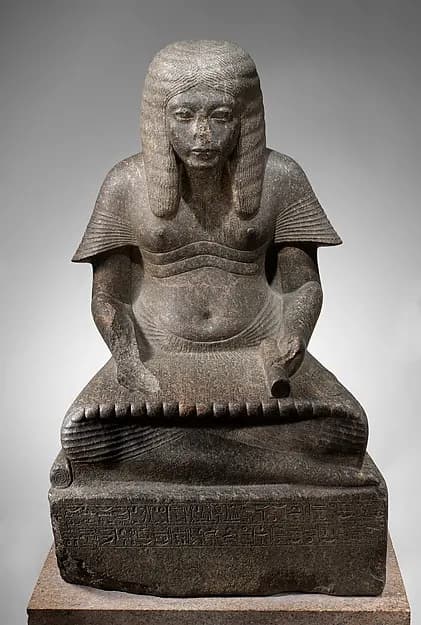
In the temple hang, Amun stands in the gods’ aisle with Ptah and Horus. Thoth writes. Amun conceals. Ptah crafts. Horus watches. That is a staff list, not a pantheon lecture.
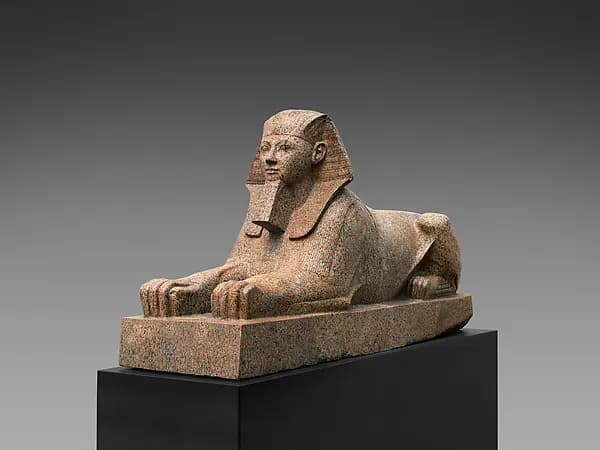
Citation

Statuette of Amun. ca. 945–721 BCE. Gold. The Metropolitan Museum of Art, New York. 26.7.1412. Purchase, Edward S. Harkness Gift, 1926

Public-domain Open Access (CC0) photograph. Dimensions: H. 17.5 × W. 4.7 × D. 5.8 cm, 0.9 kg (6 7/8 × 1 7/8 × 2 1/4 in, 2 lbs)

Temple of Thoth in the 3D universe · Back to the Egyptian art gallery