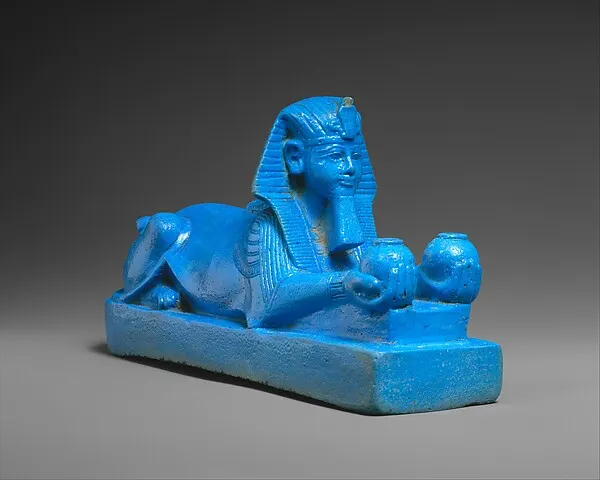
Mercury 91 is not affiliated with The Metropolitan Museum of Art. Images and object data shown here are public-domain Open Access (CC0) records from The Met collection. Citations are given so you can visit each work on the museum site.
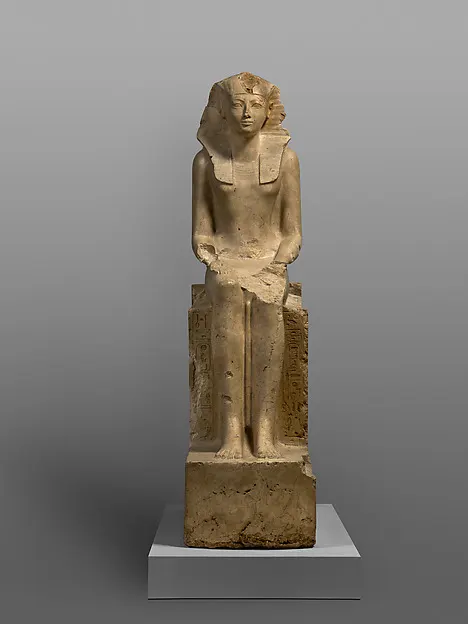
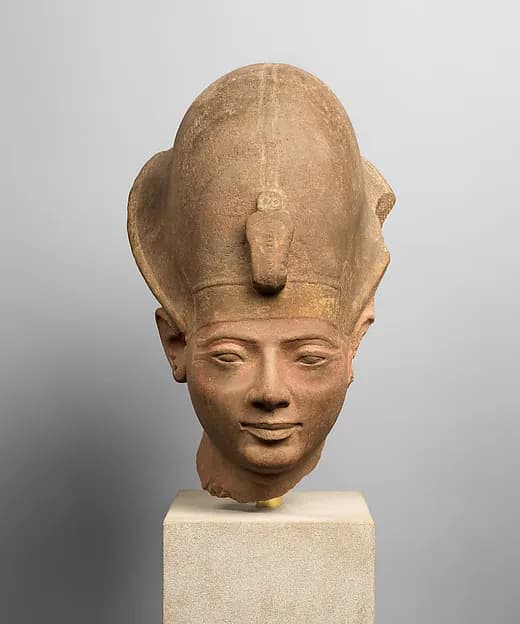
Hatshepsut’s seated statues from Deir el-Bahri use the visual language of kingship: kilt, nemes, composed hands, a face that does not apologize. She is not shown as a queen beside a king. She is the king. The sculpture is the argument.
Later, many of her images were attacked. That history is part of the object even when this particular statue survives. Egyptian art is political time travel. A statue is a claim that can be un-claimed with chisels.
In a gallery about Thoth and Mercury, Hatshepsut matters because she built. The terraced temple at Deir el-Bahri is one of the great sentences in stone. A seated figure is the author portrait for that sentence.
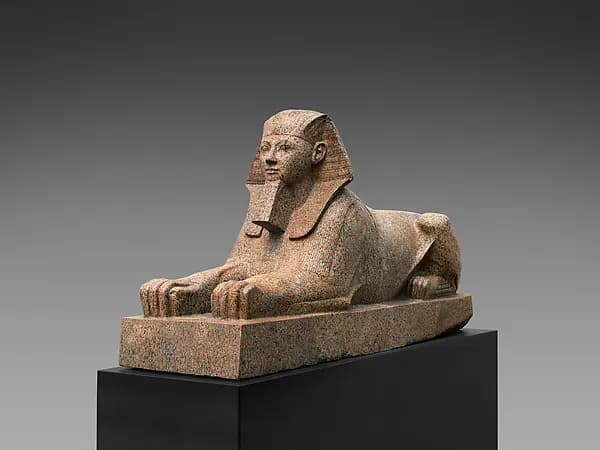
The inner court of the Temple of Thoth gives her a highlight slot beside her sphinx. Human scale and lion scale. Both are Hatshepsut as landscape: a person who wanted to occupy the approach to a holy mountain.
Citation
Seated Statue of Hatshepsut. ca. 1473–1458 BCE. Indurated limestone, paint. The Metropolitan Museum of Art, New York. 29.3.2. Rogers Fund, 1929
Public-domain Open Access (CC0) photograph. Dimensions: H. 197 × W. 53 × D. 115 cm, 1247.4 kg (77 9/16 × 20 7/8 × 45 1/4 in., 2750 lb.)