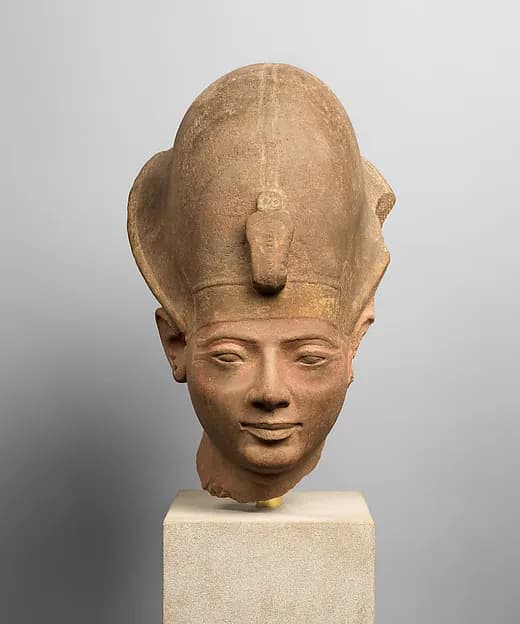
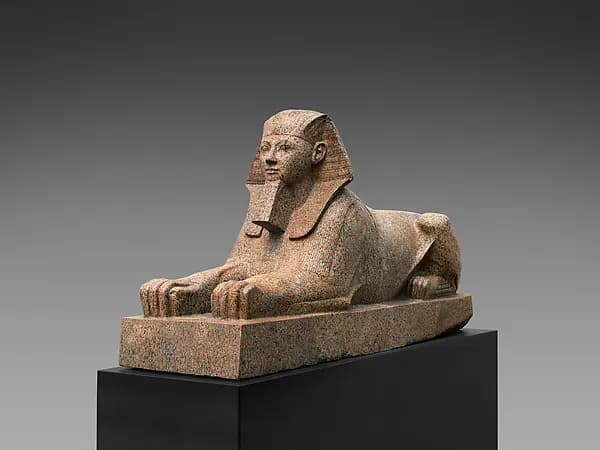
Head of King Seti II Wearing the Blue Crown, ca. 1214–1208 BCE, The Metropolitan Museum of Art

Egyptian artHead of King Seti II Wearing the Blue Crown

ca. 1214–1208 BCE · New Kingdom, Ramesside · Dynasty 19

Seti II in the blue crown is late Nineteenth Dynasty kingship: a war-cap of faience-blue, alert and ready, after the Amarna shock had passed.

Mercury 91 is not affiliated with The Metropolitan Museum of Art. Images and object data shown here are public-domain Open Access (CC0) records from The Met collection. Citations are given so you can visit each work on the museum site.

The blue crown, often called the khepresh, is the crown of action. Seti II wears it as a head without the full body. You get the alertness without the throne. That crop makes the piece modern in spite of itself.

After Amarna, Egyptian kings restocked the temples of Amun and the old gods. Seti’s face belongs to that restoration world. The eyes are outlined for distance reading. A head like this was meant to work in sun.

Blue is a sky color in Egyptian faience and glass. A blue crown is a portable piece of heaven on a human skull. That is enough cosmic content without stretching.

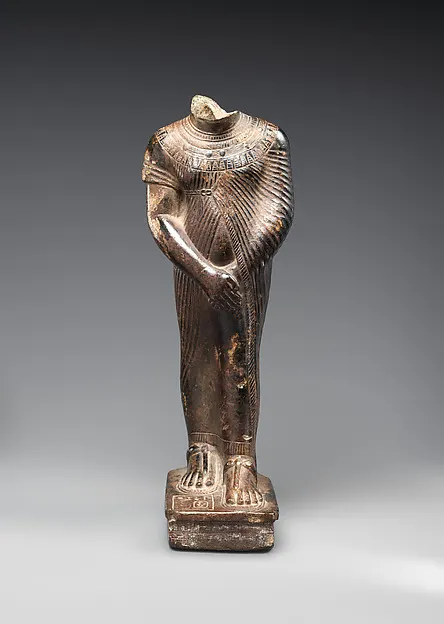
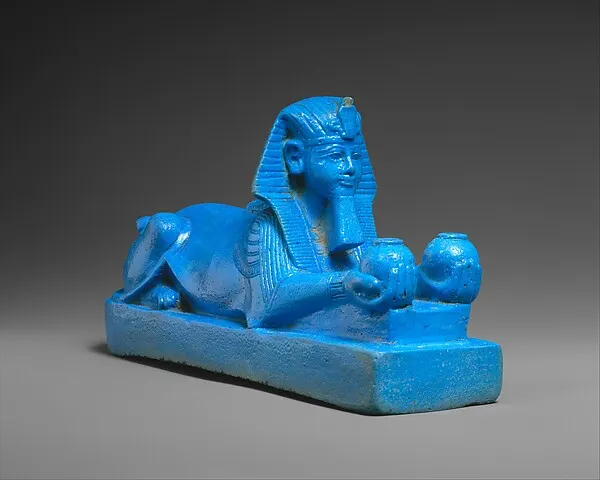
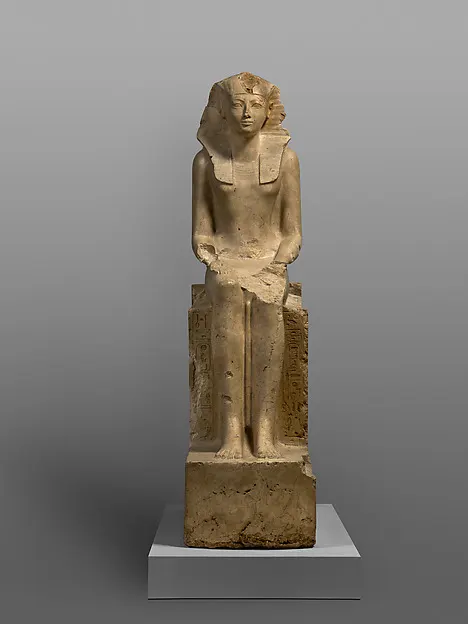
Walk him after Hatshepsut and Akhenaten. The gallery becomes a sequence of heads that tried to own the sun in different ways: female king, heretic, then a man in a war crown who needed the old temples back.
Citation

Head of King Seti II Wearing the Blue Crown. ca. 1214–1208 BCE. Quartzite, paint. The Metropolitan Museum of Art, New York. 34.2.2. Rogers Fund, 1934

Public-domain Open Access (CC0) photograph. Dimensions: H. 44.5 × W. 30.5 × D. 34.5 cm (17 1/2 × 12 × 13 9/16 in.)

Temple of Thoth in the 3D universe · Back to the Egyptian art gallery