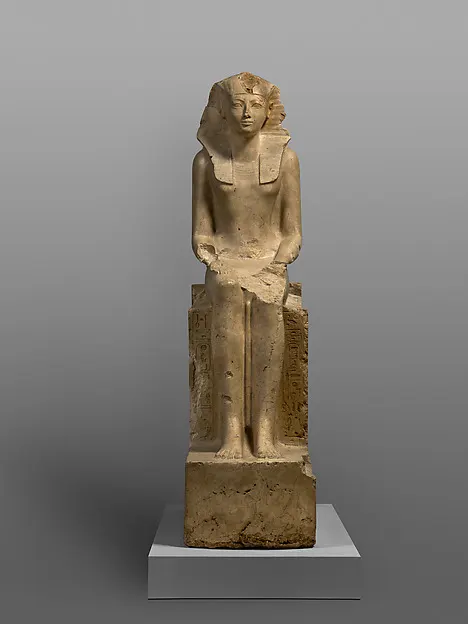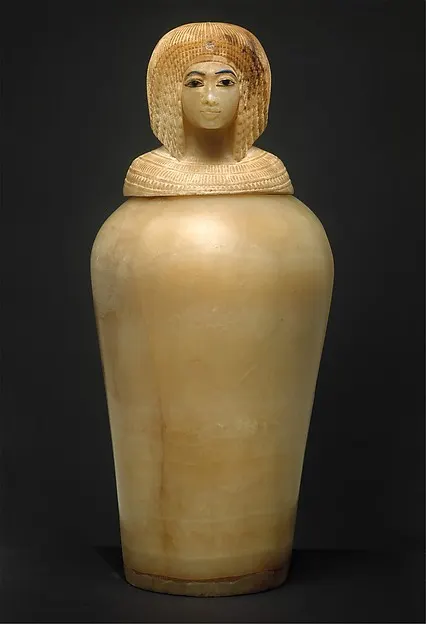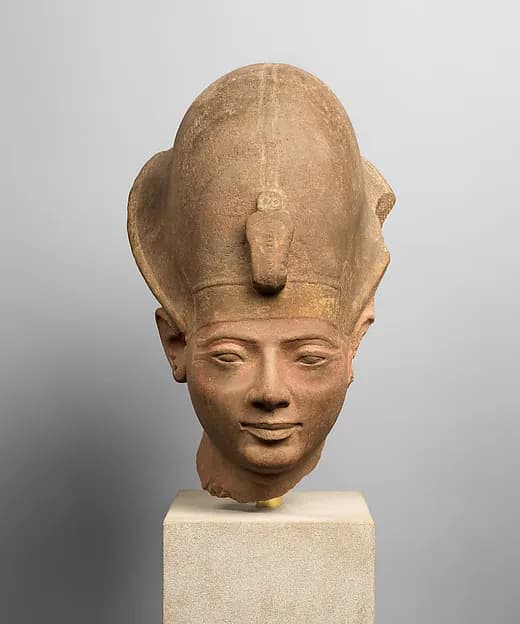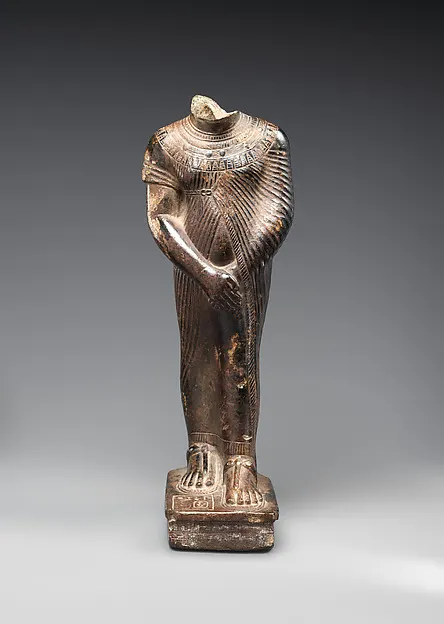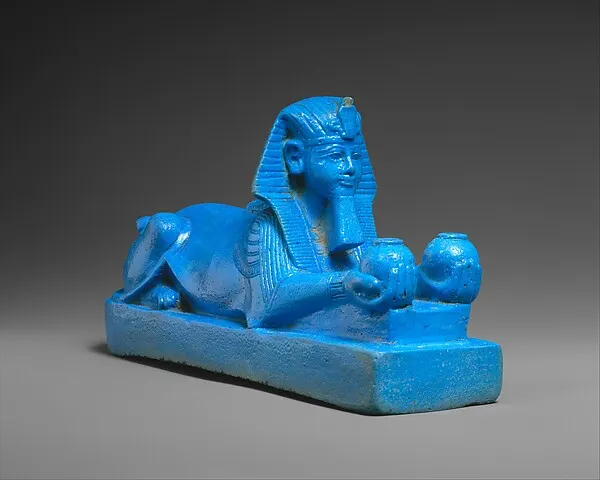
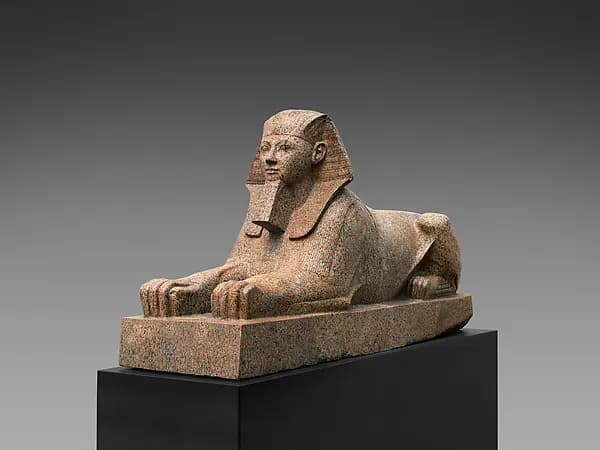
Egyptian sphinxes are not riddles in the Greek sense. They are the king as a sun lion with a human head that can still be recognized. Hatshepsut’s sphinxes lined approaches. They turned walking toward a temple into walking between versions of her.
The mane and the calm face do a double job. Power is animal. Government is a person. You are not allowed to forget either. That is why sphinxes photograph so well in a cosmic setting: they already look like they could sit on a planetary ridge.
Pair this with the seated statue. One is the administrative body. One is the mythic body. Together they are a full royal operating system.
Mercury 91 places the sphinx as a highlight stela, not as a climbable monument. The point is encounter, not a theme-park reconstruction of Deir el-Bahri. Citation stays with The Met. The 3D hang is a reading, not a replica of the avenue.