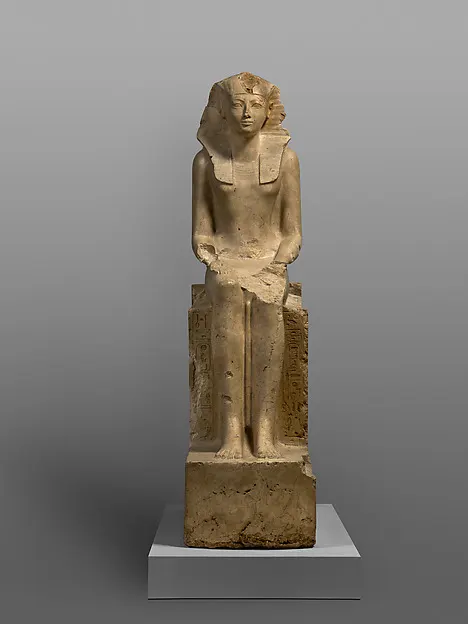
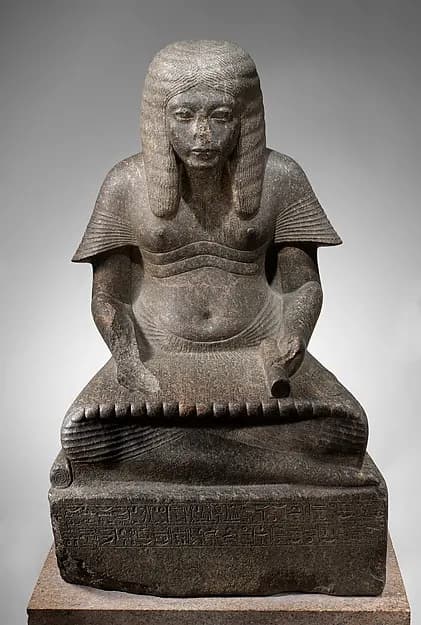
Haremhab served Tutankhamun and Ay, then took the throne himself. This statue shows him in the older, safer costume of a scribe. The papyrus on his lap is not a prop. In Egyptian court culture, literacy was a claim to order. A general who can write is a man who can make the state remember him.
The face is alert rather than dreamy. New Kingdom sculpture at this level does not flatter by softening. It argues that the sitter can hold still under inspection. That is why the piece works in a cosmic gallery: it is about attention. A scribe is a person who has agreed to look long enough to copy what he sees.
Later tradition would fold Egyptian scribal gods into Hermes. Haremhab is not a god. He is the political version of the same idea. Whoever controls the archive controls the afterlife of events. Kings wanted their names on temple walls for the same reason explorers want logs: disappearance is the default.
Stand him near Thoth in your mind. One is ibis-headed and small. One is human and almost life-size. Together they say that writing is both cult and career. The Temple of Thoth in the universe treats that pair as architecture: inner court for the god, colonnade for the officials who kept the lists.