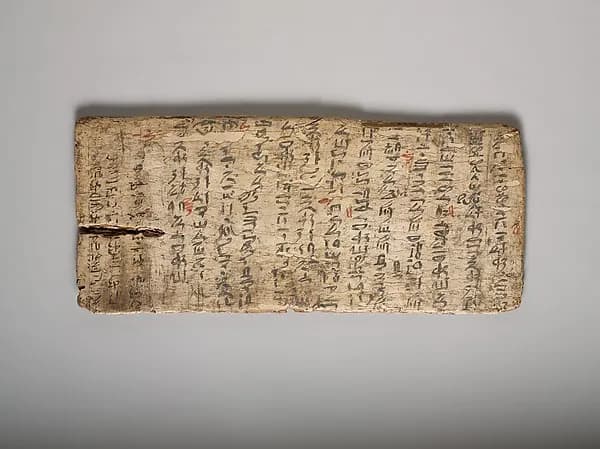
Before papyrus became cheap enough to waste, Egyptian students wrote on wooden boards coated in gesso. This one, from Dynasty 12, is a classroom fossil. The signs are not a finished literary scroll. They are homework. Someone sat with a reed brush and copied model texts until the hand remembered them.
That is a different glamour from royal portraiture, and it is closer to how most people actually meet writing. Journals, lists, and first drafts are still boards in that sense. You make marks, you scrape them, you try again. Thoth may own the myth of letters. This object owns the hours.
Look at the board as a night-sky tool rather than a relic. Egyptian scribes timed festivals, accounts, and dreams of the dead with the same script. A board like this is the humble cousin of the Book of the Dead: not a map of the Duat, just the training that made maps possible.
Mercury 91 keeps planetary journals for a similar reason. The universe is easier to inhabit if you have somewhere to write after you look. This board is the historical proof that looking was never enough. Someone always had to copy the line one more time.